
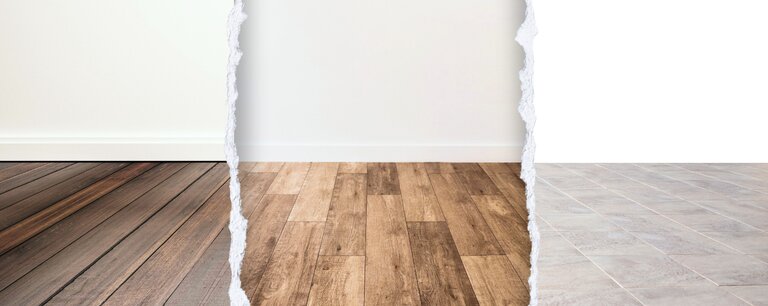
There was a time when “vinyl flooring” was a category people tolerated, but not one they celebrated. The thin, printed sheets of decades past gave vinyl a reputation it’s been quietly and methodically dismantling ever since.
Today, luxury vinyl plank (LVP) has become one of the most talked-about flooring categories in the industry, and for good reason: the gap between LVP and premium hardwood or tile has never been smaller. In some meaningful ways, LVP has even pulled ahead.
Let’s take an honest assessment of where each material stands, because making the right choice for your home deserves a clear comparison.
The Visual Case: Can You Really Tell the Difference?
A decade ago, you could spot vinyl flooring from across a room. The repetition in the pattern, the slightly plastic sheen, and the way it looked like a photograph of wood rather than the real thing.
Modern LVP manufacturing has fundamentally changed this.
Here’s how:
Embossed-in-Register (EIR) Technology: Today’s premium LVP uses printing and embossing to align the surface texture with the underlying visual pattern. Many times the grain you see is the grain you feel. Whether it’s knots, wire-brushed textures, or natural variations, it’s all tactile and visually synchronized.
High-Definition Photography Layers: The image layer in premium LVP is captured through multi-layer, high-resolution imaging that mimics the natural variation of real wood grain or stone veining.
Wider Planks, Longer Lengths: Real hardwood often comes in narrower, shorter pieces because of the material’s natural limitations. LVP has no such constraint. Wide-plank and long-plank options ( we offer 7″ x 48” and 9″ x 60”) give rooms the expansive, modern look that’s currently dominating interior design.
The result? Homeowners, guests, and even flooring professionals regularly can’t distinguish high-end LVP from real hardwood or stone tile without getting on their hands and knees.
Durability: Where LVP Has a Genuine Edge
Durability is where the comparison gets interesting, because it’s not just that LVP holds its own against hardwood and tile. In several real-world performance categories, it outperforms others.
Scratch and Dent Resistance
Hardwood is beautiful, but it’s vulnerable. High heels, pet claws, furniture legs, and dropped pots all leave their mark on solid and engineered hardwood. Tile doesn’t scratch, but it chips, and replacing individual tiles is rarely a seamless repair.
Premium LVP features a wear layer, typically measured in mils, that protects against the daily abuse of real life. Commercial-grade LVP with 20-mil or higher wear layers is genuinely resistant to the scratches and surface damage that plague hardwood floors in active households.
Water and Moisture Resistance
Hardwood and water are natural enemies. Even engineered hardwood, which handles humidity better than solid, can warp, cup, and buckle with prolonged moisture exposure. For kitchens, bathrooms, mudrooms, and basements, hardwood is simply not an ideal choice.
Our LVP is 100% waterproof. Spills, splashes, and tracked-in moisture are no match for it, and it won’t swell or buckle the way wood-based floors can when exposed to surface water, making it a smart choice for kitchens, mudrooms, and other moisture-prone spaces.
Tile handles moisture well, too, but grout lines are a regular maintenance issue. They stain, they crack, and they require periodic resealing. LVP has no grout lines. The surface is seamless.
Comfort Underfoot
Anyone who has stood in a tile kitchen for hours knows how unforgiving a hard surface can be. Hardwood softens this slightly, but it’s still a firm, cool surface.
When a thicker core LVP is installed with its attached underlayment, it provides a noticeably softer, warmer feel underfoot. For families with young children, elderly relatives, or anyone who spends long hours standing, this distinction is important.
Sound Reduction
Tile is loud, and hardwood carries sound. LVP, especially thicker profiles with a quality underlayment, absorbs impact noise and provides a quieter living environment, a growing consideration in multi-story homes and open-plan spaces.
Installation: The Practical Advantage
Hardwood installation is a skilled trade. When done properly, it takes days, requires specialized tools, and demands that your home be empty and climate-controlled. Tile installation is similarly labor-intensive, involving backer board, mortar, grout, and sealing.
Premium LVP installs as a floating floor with a click-lock system. An experienced installer can complete most rooms in a day. The floor is ready to walk on immediately with no curing time or waiting. Because it floats, it can often be installed directly over existing flooring, eliminating costly and time-consuming demolition.
LVP has become a go-to for renovations because of faster timelines, lower labor costs, and less disruption to your household.
The Limitations
We believe in giving you the full picture. LVP is not without its considerations:
- It cannot be refinished. Hardwood can be sanded down and refinished multiple times over its life, potentially extending its lifespan. If you’re looking for a “forever floor” with multigenerational staying power, solid hardwood holds a unique advantage.
- Extreme heat can be an issue. LVP can expand or be damaged by very high temperatures. It’s not ideal directly in front of fireplaces or in spaces with intense, concentrated heat exposure.
- Perceived value in resale. While the gap is closing, some real estate markets still place a premium on real hardwood. This is a nuance worth considering, though it varies significantly by region and buyer demographic.
Here’s The Bottom Line
For the vast majority of homes and lifestyles, today’s premium LVP delivers visuals, durability, and livability that rival, and in many categories surpass, hardwood and tile at a fraction of the cost and complexity.
For most families, it’s the smarter choice.
Come see the difference in person. The LVP Warehouse carries an extensive collection of premium options so you can feel and compare textures, widths, and finishes side by side. Our team is here to help you find the floor that fits your home, your life, and your budget.
Questions about how LVP compares to a specific hardwood species or tile type you’re considering? Ask our experts — we love this conversation.