
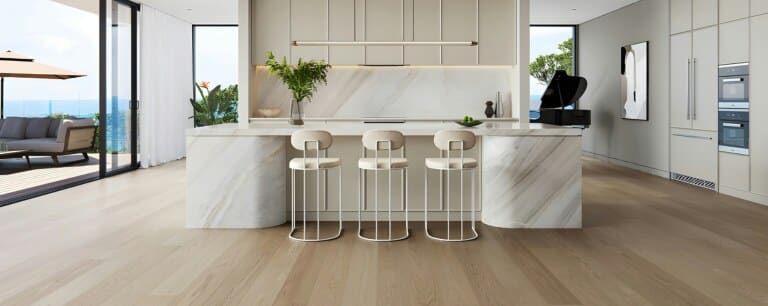
Most homeowners, designers, and contractors already know LVP looks like real hardwood, stands up to water, and costs less than the materials it replaces.
But what about the smaller moments of life that modern LVP also benefits?
- The single plank you can replace without touching the rest of the room.
- The spilled coffee that wipes away in seconds.
- The dropped pan that doesn’t leave a dent.
These are the benefits you won’t typically find in an advertising headline, and they’re often some of the everyday reasons people are happy with their floors years later.
Let’s look at some of the quieter benefits of LVP that tend to get overlooked.
One Floor, No Awkward Transitions
If you walk through a lot of homes, you’ll notice the seams in the flooring throughout the house. Tile in the kitchen, hardwood in the hallway, a transition strip marking where one flooring ends and the other begins. Those transitions are where dirt collects and where the home design is interrupted because the eye stops.
Premium LVP is waterproof, so it can run from dry living spaces into kitchens, bathrooms, and mudrooms without switching materials. The result is a home that reads as one continuous space instead of a patchwork of rooms.
Comfort That Compounds
Spend a single afternoon on a hard tile floor, and you’ll quickly realize that it’s uncomfortable. Spending a lifetime of afternoons on a hard tile floor is a real quality-of-life issue, especially for anyone on their feet in a kitchen or for aging family members whose joints don’t forgive hard surfaces the way they used to.
Thicker LVP with attached underlayment feels softer and warmer underfoot than tile and most engineered hardwood. It’s not a dramatic difference in a showroom, but it’s a noticeable one after a year of daily use.
A Cleaning Routine That Doesn’t Change With the Seasons
Hardwood requires specific cleaners, careful moisture control, and periodic refinishing. Tile demands grout maintenance and occasional resealing. Both come with a mental checklist most homeowners don’t think about until they’re behind on maintenance.
LVP’s day-to-day care is simple: sweep or vacuum, damp mop as needed. No waxing, no refinishing, no grout to scrub. It’s one less seasonal chore competing for your weekend.
Costs That Stay Predictable
The upfront price of flooring gets most of the attention, but the cost of ownership matters just as much. Hardwood refinishing, tile resealing, and grout repair are recurring expenses that show up years after installation. LVP’s lower maintenance needs mean fewer surprise costs down the road, which makes it easier to budget for the home overall, not just the floor.
It Plays Well With What’s Already There
Because floating LVP can often be installed directly over existing flooring, a renovation doesn’t automatically mean demolition. That shortens timelines, cuts labor costs, and means less disruption for a household that still has to function during the project.
Get the Most Out of Your Flooring
The obvious benefits of LVP make it an attractive flooring option. The overlooked benefits are ultimately what make people glad they chose it. Fewer awkward repairs, fewer seasonal chores, fewer surprise costs, and a floor that feels good to stand on, day after day and year after year.
Curious how these benefits play out in your specific space? The LVP Warehouse carries an extensive collection of premium options so you can feel and compare textures, widths, and finishes side by side. Come talk to our team. We’ll walk you through options built for the way your household actually lives.